

Walk into almost any workplace in Britain and you will spot them almost immediately — bold colours, simple symbols, clear instructions fixed to walls, doors and machinery. Safety signs might seem like background noise in our daily working lives, yet they play a quietly vital role in keeping people out of harm’s way. Far from being mere decoration, they form a cornerstone of effective occupational health and workplace safety strategy.
In short
- Visual safety signs are essential tools for occupational health because the human brain processes shapes and colors much faster than text.
- The UK Health and Safety Regulations 1996 establish a standardized color-coded system, using red for prohibition, yellow for warning, blue for mandatory actions, and green for emergency information.
- Consistency in signage across various industries like construction, manufacturing, and healthcare eliminates ambiguity and allows employees to react instantly to hazards.
- Emergency signage, including photoluminescent fire exit signs, remains critical for guiding individuals to safety during power failures or critical incidents.
- Effective signage is not a standalone solution but a key layer of a broader safety culture that includes risk assessments and ongoing employee training.
- Employers have a legal obligation to ensure that safety signs are clearly visible, properly maintained, and free from obstructions at all times.
- Regular audits are necessary to ensure that signage remains relevant to the current workplace layout and that employees understand the specific safety procedures indicated.
How do visual safety cues reduce workplace hazards and incidents?
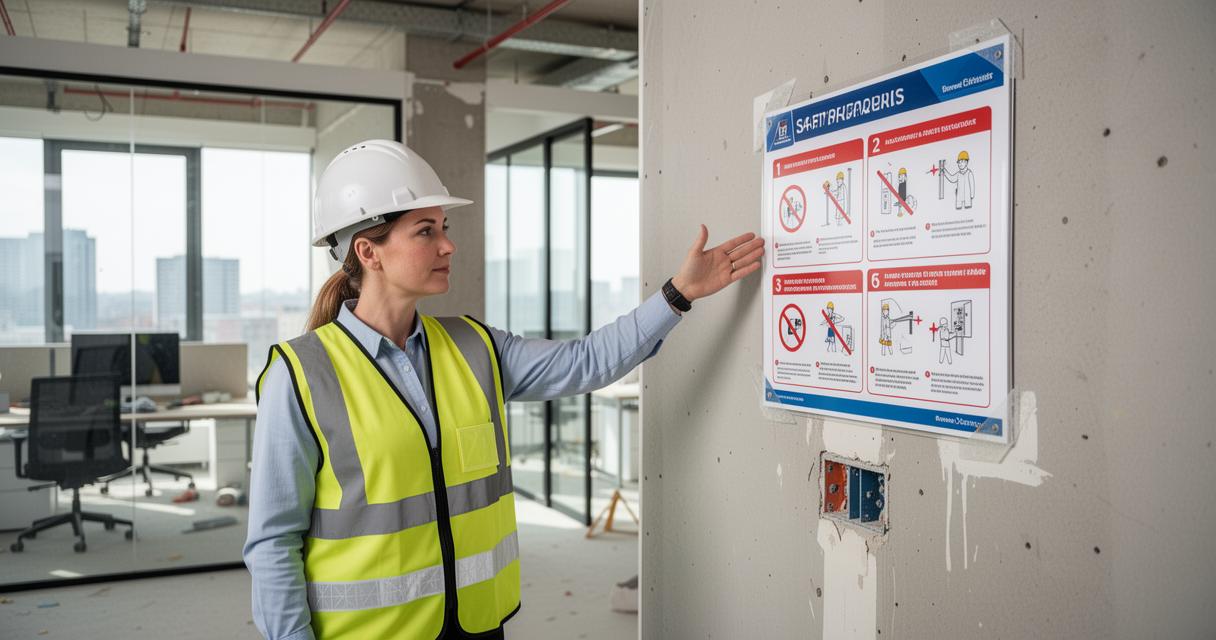
There is a reason why safety signage relies so heavily on colour and shape rather than lengthy written instructions. The human brain processes visual information far more rapidly than text, meaning that a well-designed sign communicates its message in a fraction of a second — precisely the kind of speed required when someone is about to step into a danger zone. When it comes to hazard identification, that instant recognition can make an enormous difference.
Understanding the psychology behind colour-coded warning systems
In the United Kingdom, the use of safety signs is governed by the Health and Safety (Safety Signs and Signals) Regulations 1996, which establishes a consistent colour-coded framework across industries. Red signs signal prohibition — think of the familiar crossed-out circle used on no-smoking notices. Yellow carries the universal message of warning, alerting workers to nearby dangers. Blue denotes mandatory actions, such as wearing personal protective equipment, while green is reserved for emergency information including fire exits and first aid points. This logical system means that even a new employee, or a visitor unfamiliar with a particular site, can orient themselves quickly and safely. The consistency of the framework is itself a safety feature, removing ambiguity at moments when clarity matters most.
Real-world applications across manufacturing, construction and retail environments
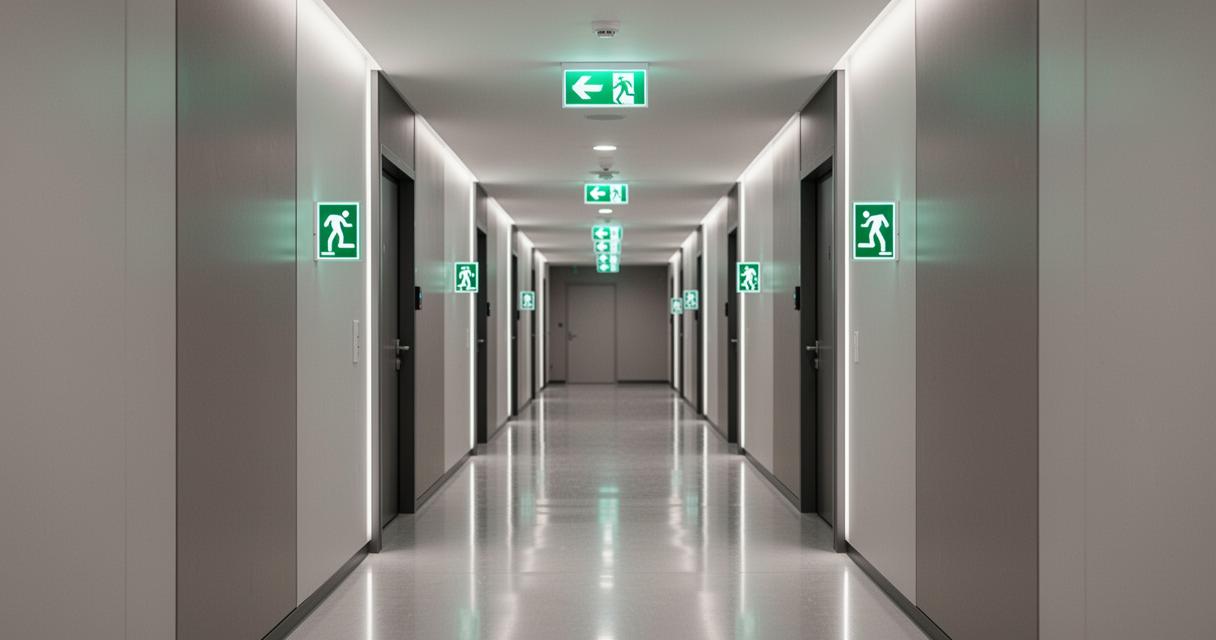
The practical reach of hazard warning signs extends across virtually every sector. On a construction site, signs warn of overhead loads and restricted access areas. In a commercial kitchen, they remind staff of hot surfaces and the correct handling of hazardous cleaning substances. In a hospital corridor, they direct patients and visitors to emergency exits while keeping clinical areas clearly demarcated. Across all these settings, the underlying purpose is identical: to make workplace hazards visible before they become workplace injuries. Signs indicating the location of fire extinguishers, for instance, ensure that anyone responding to an emergency does not waste precious seconds searching. Fire exit signs, particularly those using photoluminescent materials in low-light conditions, guide people to safety even when power fails.
Which Key Signage Elements Build a Robust Health and Safety Culture?
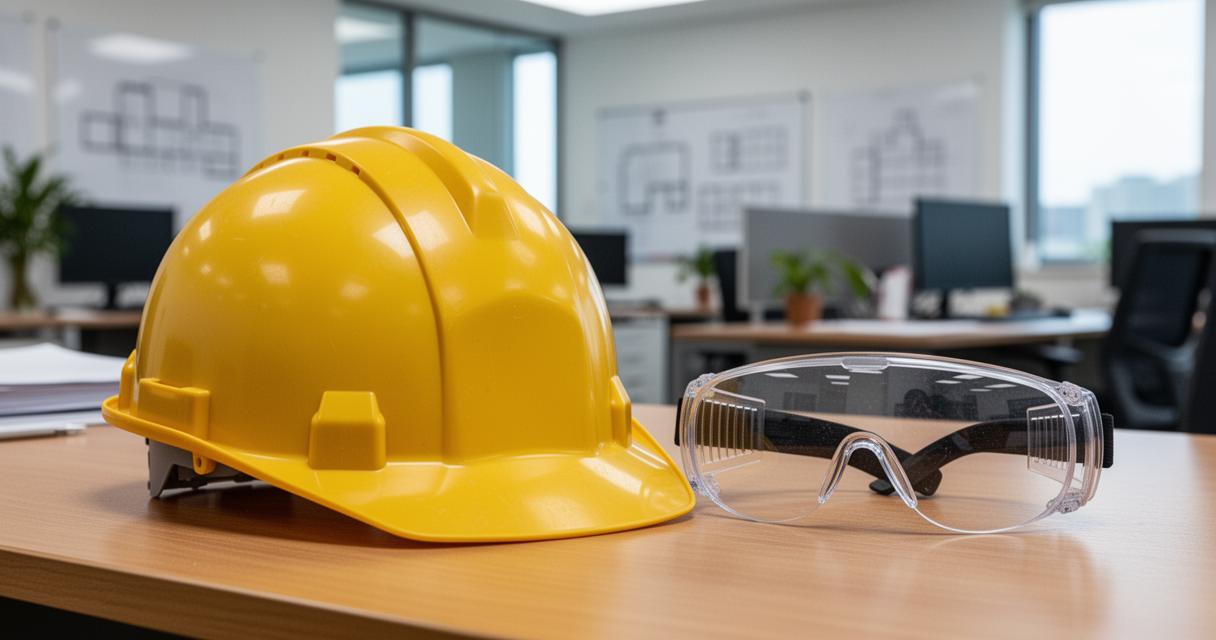
Effective signage does not stand alone. It functions as one layer within a broader framework of safe working practices, risk assessment and ongoing employee training. Together, these elements create the kind of environment where people feel confident, informed and protected.
Mandatory, prohibition and emergency signage: clarifying responsibilities
Each category of sign carries a distinct responsibility. Mandatory safety signs — those displayed in blue — communicate non-negotiable requirements: eye protection must be worn, hard hats are essential, hand washing is compulsory before returning to work. Prohibition signs make equally clear what must never happen in a given area. Emergency signs, meanwhile, go beyond simple compliance; they are the final line of guidance when something has already gone wrong. Fire assembly point signs, fire action notices and first aid location signs all serve to reduce confusion and support swift, orderly responses during critical moments. Ensuring these signs are clearly visible, properly maintained and free from obstruction is not simply a matter of good practice — under safety legislation, it is a legal obligation for employers.
Staff Training and Regular Audits to Maintain Signage Effectiveness
Even the most carefully designed sign loses its value if the people around it do not understand what it means or why it matters. This is why employee training is so central to any credible approach to workplace compliance. Workers should be familiar with the colour-coding system, understand the specific hazards relevant to their environment, and know how to respond to the emergency procedures indicated by the signs around them. Regular audits help ensure that signs remain legible, correctly positioned and relevant to the current layout and activities of the workplace. A sign obscured by a shelving unit, or one that refers to a hazard that no longer exists in that location, offers false reassurance rather than genuine protection. Keeping signage current is therefore an active, ongoing commitment rather than a one-off installation task. Combined with thorough risk assessment and a culture of incident reporting, well-maintained safety signage contributes meaningfully to reducing harm and building workplaces where people can do their jobs with confidence.